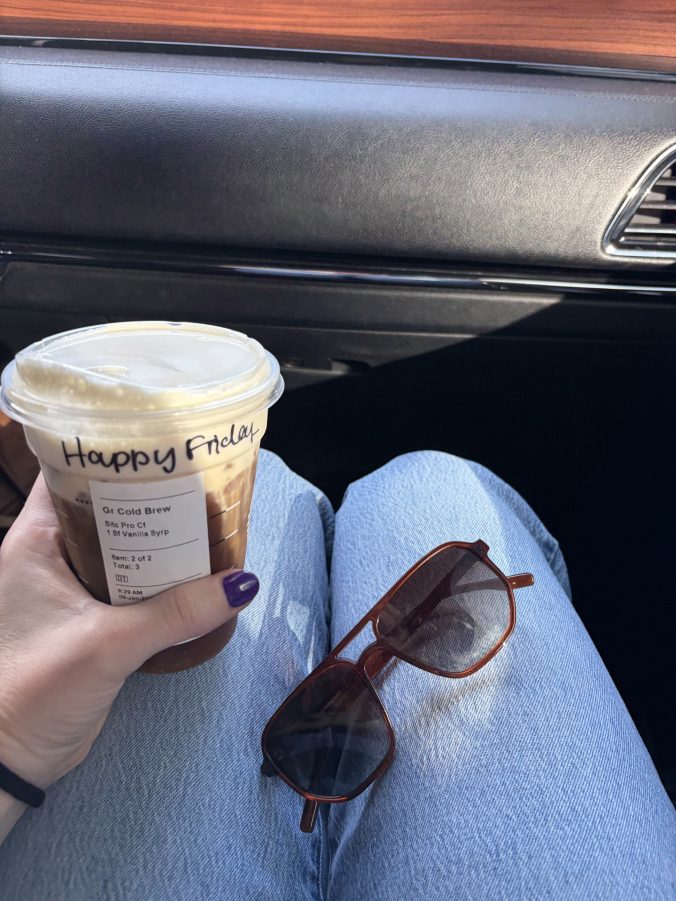
Lately, I’ve been thinking a lot about how I’ve lived my life. Not the resume version or the LinkedIn bio. Not the “licensed social worker, consultant, speaker” version.
I mean the actual life…
The constant growth.
The marriage and divorce.
The rebuilding.
The falling in love again.
The advocating hard.
The motherhood chapter.
The nights I lay awake wondering if I asked for too much.
The business risks.
The big move across the country.
The moments I felt powerful.
The moments I felt small.
And I tend to categorize all of it…
This was a success.
That was a mistake.
This made me look strong.
That took too long.
This made me look foolish.
But recently I heard this philosophy:
With every life experience you have, you receive a token. Good, bad, or indifferent, everything you do gains another token.
You travel the world? Token.
You run a marathon? Token.
You get married? Token.
You get divorced? Token.
You build a company from scratch? Token.
You love someone deeply and it doesn’t last? Token.
You get fired? Token.
You become a parent? Token.
You go bankrupt? Token.
The idea here is life and our experiences do not need to be “right” or “good” to receive a token.
I’ve worked in spaces where there is a lot of pressure, and the stories are heavy. When you sit with enough trauma, you start to understand something about being alive: safety is never guaranteed, time is never guaranteed, outcomes are never guaranteed. The cards we are dealt are sometimes unfair, and the only thing that’s guaranteed is that you are here, in this moment, having an experience.
I think for a long time, I was trying to manage and categorize my experiences instead of living them. I am still guilty of doing this sometimes, trying to avoid the “wrong” tokens, because of course we want to avoid looking foolish or avoid a heartbreak. And I definitely try to avoid instability or big mistakes. But when we live like that, we just collect fewer tokens.
And then I heard about the Black Coffee Theory:
You walk into a coffee shop wanting a latte, but instead of ordering it, you say, “I just don’t want black coffee.”
The barista looks at you, confused. “Okay… but what do you want?”
“I just know I definitely don’t want a black coffee”.
The barista is still confused, and as she is making drinks for others, she is trying to recall your order. And what is the only thing she can recall? A black coffee.
So guess what lands on your table?
What you get is what you keep talking about and focusing on, and this is how most people are living their lives:
I don’t want to be in another relationship where I feel alone.
I don’t want to struggle financially.
I don’t want to feel invisible.
I don’t want to burn out.
It sounds self-aware, evolved, and even a bit protective. But when you focus your energy on what you’re trying to avoid, that is all you notice. You don’t actually move toward something new, and you miss your chance to collect another token.
There were seasons where I was so focused on not repeating past pain or mistakes that I never fully articulated what I actually wanted instead. I knew I didn’t want emotional inconsistency. I didn’t want chaos or instability. I didn’t want to feel like I had to prove my worth or shrink for others or stay somewhere that was not the right fit for me.
But what did I want?
Stability.
Reciprocity.
Ease.
Fun.
Love.
Excitement.
Success.
Confidence.
Being more aware of this has made me realize the difference between saying, “I don’t want chaos,” and “I want steadiness”, because one is defensive and one is directive.
For a long time, I would say things like, “I don’t want to struggle forever,” or “I don’t want to feel like this every day.” But I rarely said things like, “I want overflow. I want expansion. I want to be highly visible. I want a successful career. I want consistent happiness.” Because saying what you don’t want feels safer; it doesn’t expose your desire or risk disappointment. And for some reason, it feels arrogant or self-serving to talk this way; it feels vulnerable to speak our desires out loud. But why should it? Why is desire something we don’t think we deserve, or need to feel embarrassed about? By acknowledging our desires, we avoid stagnation. Sure, we still go through some painful times and gain a token we may not have wanted, but here’s the intersection I’m finally understanding:
Collecting tokens requires courage and ordering what you actually want requires confidence. Because when you decide that every experience is a token, even the painful ones, you stop trying to edit and categorize your life. You stop pretending certain chapters shouldn’t have happened and you stop attaching shame to the parts that didn’t work out.
That divorce? Token.
That relationship that cracked you open? Token.
That season of financial uncertainty? Token.
That bold decision to leave something stable? Token.
These examples are not proof you failed; they are proof you lived. And once you accept that, once you stop fearing the “bad” tokens, you’re free to order your coffee differently. You’re not trying to outrun anything anymore or live in this negative bubble. You’re not standing at the coffee counter anxiously saying, “Just not that again.” You’re saying, clearly, “This is what I want.”
I want depth without instability.
I want impact and softness.
I want success that doesn’t cost me my nervous system.
I want love that feels safe and expansive at the same time.
I want wealth without apology.
That is your coffee order. And the real growth isn’t about becoming someone new; it is about integrating both ideas:
1. Life will hand you experiences you didn’t plan for. Some that will stretch you, humble you or undo you. They are not detours or proof you failed. They are tokens, AKA evidence that you lived fully instead of cautiously.
2. And then, with everything those experiences taught you, you stop organizing your future around what you’re afraid of and start organizing it around what you actually want. You get to decide what you are moving towards.
All that being said, I don’t try to plan out my tokens anymore. Because even the ones that humble me, expose me, or the ones that hurt me built the person who can now walk into the coffee shop and say without hesitation what it is that I want. And that does not make me entitled or naive. I just now know the difference between a black coffee and a latte.
And I’m done pretending I don’t have a preference.
– keep shining
Find me: Facebook, Instagram, Pinterest, LinkedIn


Recent Comments